Wednesday, July 1, 2009

Maps and Mazes

Trout are my favorite animal. There are two reasons for this. The first has to do with evolution. Ask me what I like about the natural world, what fascinates and intrigues me, and I’ll say evolution. But what does that mean? I’ll tell you. It’s the diversity of life on earth. It’s the 9000 different species of birds that have adapted to live in deserts, mountains, swamps, polar ice caps, and over the open ocean. It is finding a plant that is the exclusive food of a certain species of caterpillar, and knowing that the butterfly that spawns of that insect is the sole living creature to pollinate the flowers of that particular plant. It is seeing mule deer in Idaho, whitetail deer in West Virginia, and key deer in Florida in the same year. It’s looking at seahorses in a glass tank and watching them move in a way that is outside our ken and knowing that it was millennia of lives and deaths and successes and failures all played out through minute and mysterious changes to a certain molecule with a penchant for self-replication that led up to that alien yet perfect movement.

You take one family of animals – salmonids (salmon, trout, and char) – and you’ve got yourself a snapshot of evolution in all its entirety and beauty. There are more than 70 species of trout in North America, from Mexican Golden Trout living in high altitude streams in the Sierra Madres to cutthroat trout living in Yellowstone to arctic char inhabiting deep lakes the farthest reaches of the arctic circle. At first glance they are all very similar, but take a closer look and you’ll see that tremendous differences exist in their behavior, feeding habits, mating patterns, and of course appearance. Even within a single species there are not-so-subtle differences among populations in particular regions or even particular streams. Take rainbow trout, the coastal variety of which is found along the Pacific coast from southern California to central Alaska. In each region, differences in the environment – the length of the seasons, the availability of food, the presence or absence of predators – have led to adaptations that make these trout distinctly different from members of their own species living indifferent areas. Rio del Presidio rainbow trout in Mexico feed mainly on hatching insects and rarely exceed 9 inches in length. Some rainbow trout called steelheads – the Columbia River is famous for them - have even evolved to make sea runs like salmon. These anadromous trout migrate to the open ocean, feed on invertebrates, and then return to freshwater to spawn. Our rainbows here in Bristol Bay drainages stay in freshwater for their entire lives, but they time their movements from lakes to streams to coincide with salmon runs. They feast on rich salmon eggs and fry, gifts of nutrients from the open ocean hundreds of miles away. They can easily exceed 30 inches in length – veritable monsters of our deepwater lakes and flowing rivers. But despite these significant differences, all these rainbow trout belong to the same species. They are close enough genetically to mate and produce fertile offspring.

That’s what I mean by a snapshot of evolution. Take those populations of rainbows, keep them isolated for another few thousand years, let them continue to evolve to suit their own particular lakes or streams, and all of the sudden you have a different fish entirely. A new species. The diversity of life on earth.

You find that kind of intraspecies diversity in all kinds of animals. The whitetail deer I see in Florida have a different yearly cycle than the whitetails I see in West Virginia due primarily to the lack of seasons in south Florida. Virginia deer are bigger as well – more body mass is better for colder climates. Our key deer, a whitetail subspecies living in the subtropical Florida Keys, are the smallest of them all, really only the size of a large dog. But despite their differences, all those deer are pretty much the same in appearance. There is something special about trout. Besides size, behavior, and movements, the different populations of trout look different. Which brings me to the second reason I love trout: they are beautiful almost beyond comprehension. I can’t begin to describe the rich colors, the intricate patterns, the mysterious designs that adorn the back of a rainbow trout. It’s like you’ve discovered a part of nature that is a physical and living celebration of the beauty and allure of all the natural world. Like buried deep in the 4 million year history of evolution, hidden in those endless lines of code that are DNA sequences, there is a hidden instinct for creativity and beauty. Always yearning to come out, we catch glimpses of it in all our living things, but it is on the back of trout that this instinct was finally manifest in all its glory.

I sought to behold that beauty firsthand on my trip last weekend. You see, the kind of amazing diversity I was discussing earlier exists here in Katmai country. In the freshwater lakes and rivers of the Naknek drainage we have all five species of salmon (pink, coho, chum, king and sockeye), rainbow trout, lake trout, and arctic char. In May I fish Brooks Lake for lake trout drawn to the surface from their homes in the deep by the rays of the springtime sun and the promise of emerging sockeye fry to feed on. Come early June I fish Brooks River for rainbows attracted to the flowing water for the same reason. Late June brings the sockeye salmon and I fish them until they become wasted and deteriorated from spawning. And I fish Margot Creek in August for arctic char who have followed the salmon up the creek to feed on their just-laid eggs. It’s these char that I want to tell you about.

Arctic char are specialists of the far north, in fact living in lakes farther north than any other species of freshwater fish. Here in Katmai we find them in Margot Creek in August where they are drawn from the deepwater of Naknek Lake to feed on freshly-laid salmon eggs. They are a silver fish dotted with gorgeous pink spots. You stand in a rushing mountain stream, the greens and tans of the forest behind you, the blues and grays of riverbed in front, and from these sublime hues of nature your flyline draws an animal secretly displaying the most remarkable and unexpected of colors – pink. Babygirl pink on the back of a fish. A beauty that we as men are privileged to know. Take a look.

But there is more. Legends exist of a “golden-fin trout” that exists only in Idavain Lake, a high-elevation lake in the backcountry of Katmai. I was intrigued by these legends. A snippet in an out-of-print book suggests these “trout” are actually a unique population of char that in their centuries of isolation developed a singular coloration. Old-timers say they were actual golden trout from the lower 48 stocked in Idavain Lake by a lodge owner back in the day, surely died out by now. A fishing guide here says they exist, he knows someone who caught one, a fishing guide there says they are a myth.

So I set out to unravel the mystery. I took a one of our 17-foot Lunds from Brooks camp to the north shore of Naknek Lake where is left it, hoping the south winds would not increase and swamp it while I was away. You see, many people fish Idavain Creek where it spills into Naknek Lake, but few ever see the source of this creek high up in the mountains. Idavain Lake is separated from Naknek Lake proper by a series of waterfalls that preclude getting there in a boat, so hiking in is the only option. I set out with a full pack – tent, sleeping bag, food for 2 days, fishing gear – for a 5 mile hike straight through the trailless boreal forest of Alaska. It was about as bad as bushwhacks come. Cottonwood forests littered with downed trees, alder and willow thickets that tear at your face and clothes, thick spongy moss that makes it seem as if you are hiking through mud. All of this on a straight incline up a mountain ridge. Bear scat was prevalent, as was sign of moose. Two and a half long hours later I reached the top of the ridge and caught my first glimpse of Idavain Lake. Five miles long and 2 miles wide, this expansive backcountry lake situated in a mountain valley is gorgeous. I hiked down to near the shore and set up camp. I woke up Saturday to a chorus of songbirds, a view I consider myself lucky to have experienced in my short life, and the knowledge that I was the only person within maybe a 10 mile radius. I spent that day exploring, birdwatching, glassing the hillsides (unsuccessfully) for moose, and of course fishing. It was near the outlet of the lake into Idavain Creek on the east shore about a mile from my camp that I struck gold. Golden-fin trout, that is. The wind from the west was pushing waves and presumably baitfish onto the east shore, and I caught several of these little guys before trouble with my fishing reel forced me to stop. As for the legends the old book proved right, the "golden-fin trout" label was a misnomer. The fish were clearly arctic char – the pink dots removed any doubt of that – but with coloration entirely different from the char I catch in Naknek Lake and Margot Creek. Their back was darker and tinted with a glorious gold the color of sunlight. So there you have it. An isolated population of char, so close and yet so far from their brethren in Naknek Lake, and with a unique set of genes that expressed themselves in a magnificent and distinct color.

I said before that I could not express in words the beauty of trout but my favorite author did a pretty good job and I will share his words with you, as well as this picture.


Oh, I forgot. There is a third reason I love trout. They taste delicious. Alaska natives say arctic char are the finest tasting of all the freshwater fishes up here and I have to agree. I gutted this little fellow, scored him along his ribcage, stuffed him with butter, fresh garlic, and cajun seasoning, wrapped him up in tinfoil, and cooked him over the open fire. Sitting by myself on a backcountry lake, the sweet smell of campfire smoke drifting my way, the Alaskan sunset on the horizon, not another soul for miles, encircled by a cloud of mosquitos and blackflies, and here I am eating what would be a 50 dollar meal in New York City. Cooked-whole trout, wild caught – a delicacy. That’s what life is all about folks.


“Once there were brook trout in the streams in the mountains. You could see them standing in the amber current where the white edges of their fins wimpled softly in the flow. They smelled of moss in your hand. Polished and muscular and torsional. On their backs were vermiculate patterns that were maps of the world in its becoming. Maps and mazes. Of a thing which could not be put back. Not be made right again. In the deep glens where they lived all things were older than man and they hummed of mystery.”

from The Road by Cormac McCarthy

Monday, August 25, 2008

Katmai Caldera

I got back yesterday from my solo ascent of Katmai Caldera. Katmai Caldera was formed as a result of the largest volcanic eruption on earth since 1884. During that 1912 eruption Mt. Katmai collapsed forming a 2 mile wide crater lake in a caldera where there had previously been a mountaintop. That eruption also formed the massive ash-covered Valley of 10,000 Smokes, where we offer daily tours via a 23-mile bus ride from Brooks Camp. Most people only go there for the day and see the view from our overlook cabin, but you can get dropped off and backpack out there and see the actual volcano, Novarupta, as well as a host of other volcanoes like Mt. Katmai and its crater lake. The above link (you should zoom in) shows the view from the overlook, the start of my hike. At the far end there is the dirty foot of a glacier leading up to a snowy concave horizon - that is my destination, 20 miles away. Well I hiked there on my 3 day weekend, and all I can say is that it was one of the most awesome things I have ever done in my life. I had the best weather I have ever seen in the Valley - sunny and not a cloud in sight. I made it out to the Baked Mountain huts on my friday (actually sunday) night. The Baked Mountain huts are some old dilapidated shacks in the middle of the Valley put there in the 50s by USGS, and is currently used as a convenient base camp due to its central location to explore the Valley. You might remember it from my blog last year. It is a 12 mile hike to the Baked Mountain huts, with 2 river crossings that I did in exactly 4 hours, with a 40 pound pack. That is fast. I wanted to do that so I would have 2 possible days to make the caldera, in case the weather was bad one day. A lot of times people have to turn back because the clouds are too low, but that wasn't a problem this weekend.

The next day (1st day of my 3 day weekend) I hiked to the Caldera and back - around 18 or 20 miles. The scenery is beyond description. A few miles from the shacks, what is left of Mt Katmai comes into view. There are 3 enormous glaciers that spill off of it and end in giant muddy feet, and across one of those feet and straight up the side of a snowwhite mountain you can see where the rim of the caldera would be. It is an incredible feeling to take a look at that landscape, see your destination 7 miles away and 3500 feet up, guarded from you by glaciers, snowfields, crevasses, and innumerable smaller hills and peaks, and then start walking that way alone. I had no idea when I started out if I would be able to do it but I decided to give it a shot. My buddy loaned me his cramp-ons and iceax, but I hardly needed them as the snowpack was still firm and good for walking. Coming over the last slope up to the rim, at 5500 feet above sea level, that first glimpse of the crater lake was breathtaking. A crystal bluegreen lake, massive, a few hundred feet below you. Like in a bowl with jagged mountain peaks for its rim. Thinking about it makes me regret, for the first time this summer, not having a camera. I tend to believe that my own memory offers a more true representations of the things I have done in my life than photographs, but in this case I wish I could send you some pictures. Here is one that that my friends Ralph and Greg took last year. The first shows part of the route up to the caldera. The snowy lip at the top is the rim. It was a much clearer day when I climbed it.


The second is a picture of the crater lake itself.


Here is an aerial view of the Caldera, which may be the best way to understand its scale.

The route that looked the easiest was to hike through a higher saddle between two peaks and then drop back onto the main glacier for the final push to the rim, and on that saddle before I dropped back down I got an added bonus. I could see the coast! Katmai Bay 20 miles to the south! Through my binoculars I could see the wide braided floodplain of Katmai River feeding out to the ocean, and waves lapping in on the shore. And in the distance, what I thought at first were distant clouds, was actually a range of jagged mountains - Kodiak Island, over 120 miles away. Imagine my feeling - I had always wanted to climb somewhere to see the coast, and I had no idea that this trip would put me in view of it. On the way back, I climbed the small hill whose saddle I was walking through and from there, I could see in a panoramic view the Pacific coast and Kodiak on one side and all the way 45 miles back to Brooks Lake and Naknek Lake (where I sit now typing this journal) on the other. Here is a good satellite image of the Valley, you can see my route - I started at the west end of Windy Creek, camped at Baked Mountain, then went to the Caldera and back. You can also see the Pacific Coast and Katmai Bay that I caught a glimpse of. It was a 12 hour hike that day, and when I finally made it back to Baked Mountain even a foam pad on a plywood bunk gave me pleasant dreams.

Sunday, August 12, 2007

My Mom Caught a 32-inch Rainbow Trout

That's right. If that statement does not immediately blow your mind, go ahead and google "record rainbow trout" and get back to me. Of course, you don't catch a fish like that without an expert guide and captain, which was This Guy. We caught him trolling off a shelf in the Bay of Islands in Naknek Lake.


My parents visited here for a week and had the time of their lives. We also caught a bunch of Arctic Char in Margot Creek, and of course some sockeye salmon right here at Brooks River. My mom hiked up Mt. Dumpling on a beautiful day and got a bird's eye view of Brooks River. It's too bad we didn't take a good picture of the trout, now no one will believe us. The pictures we have don't have a point of reference so you can't tell how big it really is. But we measured it, 32 inches, and it was fat as hell too. Put it this way; it was way bigger than the biggest sockeye I have caught. It was huge.

Just for fun, here is a picture of me at Halloween dressed up as the guy who got drunk and chased bears through the river (see previous comments). Note that my coworker Greg looks way too much like me.


That's all for now catch y'all later. If anyone can send me a tape of the Jags first game, or the upcoming ones, let me know.

Thursday, July 19, 2007

Clever Girl

I put up a post talking about what the falls looked like before the salmon arrived, but I never put the picture up. Here is what the falls looked like when I first got here.


To quote myself, "For now Brooks Falls is just a small waterfall on a mile-long river, and standing there it is hard to believe that such a seemingly insignificant place is the basis for the health of an entire ecosystem, the survival of a community of brown bears, the strength of a regional economy, and the spiritual fulfillment of thousands of people."

Well folks, it's not so hard to believe anymore.


And here's what it looks like if you step back a bit:


There you have it, the reverse-zoo of the Brooks Falls River Platform. Here's another shot from the downriver Riffles Platform, looking up at the falls.

More on the bears later; I have a few more pictures to share. The other day I went out fishing in Naknek Lake, and I wasn't having any luck so I traded my pole for my camera so you could see the kind of views I get here while waiting to hook a salmon.

Here is another great view; I took this photo of Brooks Lake right before I set out in a boat to Headwaters Creek at the other end of it to fish sockeye.

I took these from the same spot later that day. Follow the eagle -- he starts in front of Dumpling Mountain...


And 27 seconds and 180 degrees later he is in front of Mt. Kelez.


Working the corner, a wooded spot where bears frequently pop out right next to you, can be an exciting affair. But I often ponder what it would be like if brown bears were not the solitary creatures that they are, and learned to hunt in packs. I call this my "Jurassic Park Theory"; imagine a group of photographers gawking over a gorgeous blond bear in the distance, when all of a sudden the bears that have been stalking them all along ambush from the sides... Fortunately for us (or unfortunately depending on how much you like photographers) bears are not velociraptors. A spring cub with a protruding tongue seems intent on reminding me of this:

Friday, July 13, 2007

Bay of Islands

Sorry I haven't had the time to write an entry lately. Things are getting pretty crazy around here; lots of people and lots of bears. It might be impossible to describe the situation at Brooks Camp with mere words and pictures. Would you believe me if I said that this morning I had to put my waders on to cross the river because there were 8 bears within 50 yards of the bridge? How about if I told you that two minutes later, on my way to Brooks Lake to go fishing, I had to back off the trail to allow a mother brown bear with a cub to pass within about 20 feet of me? And if I said that as I was backing up, I allowed myself a calmer look at this sow and cub and realized I knew their names? Does it sound unbelievable when I returned tonight from Brooks Lake tonight, I actually was able to cross the bridge -- after the spring cub that had climbed onto it managed to find his way back to his mother and sibling, and after they and the other sow with her three 3-year-old cubs moved off? Right now I am using a computer in the ranger station; it's 1:00 in the AM and actually dark here. Imes popped in 5 minutes ago to tell me to be careful, he just saw the rear end of a large bear walking through camp. My roommate just came in and said when he opened the door of our cabin, there was a bear right in front of him. I am starting to wish I had brought a flashlight.

But there will be plenty of time to talk about Brooks River and its remarkable and hairy inhabitants. As you know, Brooks Camp is just a tiny dot on the map of a 4.7 million acre park that includes hundreds of miles of coastline, a stretch of the Aleutian mountain range containing 5 active volcanoes, the second biggest lake in Alaska, and the valley where the largest volcanic eruption of the 20th century took place. I have decided that I am going to try and see as much of this incredible park as I can while I am here, and so last weekend I ventured to the North Arm of that aforementioned lake to a spot called the Bay of Islands.

I had run across some pictures of the Bay of Islands on one of our computers and decided I would like to go there. As it turns out, the Park Service has a backcountry cabin in the bay that can be reserved and somehow I was lucky enough for it to be open on my day off. So Ralph (a ranger from Savannah) and I took off bright and early in one of our boats loaded up with a couple kayaks so we could do some exploring once we got there.

In hindsight I should have taken a more pirate-like approach but at the time coffee seemed more appropriate than rum. It was an hour long ride around the corner of Mt La Gorce (link to map above) to get to the Bay of Islands, and as we got into the bay I was amazed at how a short boat ride could bring us to a wilderness so unique from the one we left at Brooks Camp. Here are those pictures had seen on our computer; they are an aerial view of the Bay and do the best job of acquainting you with the landscape:


As you can see, the Bay of Islands is a valley where the water level has risen to create a bunch of small wooded islands -- a great place to explore, camp, or fish. It has been described as the Everglades or Keys of Katmai, and I definitely got that feeling as I was kayaking around. There were some marshy areas that definitely reminded me a canoeing in Florida, if not for the huge mountains in the background.


Fure's Cabin is located a the end of the bay, in a small cleared area on the thickly forested shore. It was built by a trapper in the 1920s before that land was part of a National Park, and technically Roy Fure was trespassing from after 1931 when his land was incorporated into Katmai. He continued to live there anyway, and today the NPS maintains the cabin for visitors to stay at; you only have to reserve it (usually far in advance) and find a way to get there (boat or floatplane). Its red roof guided our approach from afar.


The cabin was cozy and clean, and you cant beat the panoramic view... (click for a bigger picture)

We dropped off our stuff at the cabin and set out in the kayaks to explore the nearby islands. They had mostly rocky shores, but I stopped at a few sandy beaches and was surprised to find bear and moose tracks at all of them. There isn't exactly a great food source on these small islands, unless you consider a white-crowned sparrow a hearty meal, so I wondered why a bear would take the time to swim across a huge lake to get to an small island without food. Maybe he was just passing through on the way to the salmon at Idavain Creek and decided he would swing over to a couple of islands to explore and claim them for his own. Maybe he caught a whiff of a good smell and decided to go check it out. What about the bears that beheld the islands with curiosity but decided to carry on with more important tasks? Either way, it must feel nice just to be faced with such a dilemma. The thought of such a wild and unconstrained choice makes me reconsider my notions of freedom.

As I paddled, I didn't see any bear or moose, only their tracks, but I did see some other fascinating wildlife that I have never seen before. Take a look: a goldeneye and some common loons.


Fure's Cabin has a wood stove for heat and cooking, so after kayaking around most of the day I set out that evening to do some fishing. I wasn't out there 30 minutes before I pulled up to the side of the boat the biggest trout I have ever seen in my life; a salmon-sized lake trout, 28 inches at least, fat all around. When I saw it came to the surface "oh my god" was all I could think of to say to myself. I reached over to grab it through the mouth to lift it into the boat, but for some still inexplicable reason I lifted it by the line, which of course broke. I watched that monster, our dinner, swim away slowly and disappear back into the depths. It is moments like these that make grown men cry. Somewhere in the Bay of Islands a massive lake trout is lurking on a sandy shelf, my neon green spinner proudly displayed in the side of his mouth. I should offer a reward.

Believe it or not, fishing takes on an entirely different feeling when you are really counting on it for food. I wasn't going to starve that night inside Fure's Cabin, but that lake trout would have been a hell of a lot better than the peanut butter and crackers I ended up eating. It was the thought of those crackers that kept me fishing for 3 more hours after I lost that monster laker, but to no avail. It was one of the few times I have been shutout since being in Alaska. From his vantage point back at the cabin, Ralph did not yet know I was returning empty handed.

After our disappointing dinner, we decided to take the trail from Fure's to Lake Grosvenor. This trail is part of the Savonoski Loop, an 86 mile canoe/kayak loop that takes you from Brooks Camp up through the Bay of Islands, down Lake Grosvenor into the Savonoski River, and back into the Iliuk Arm of Naknek Lake and to Camp. The only part on land is a 1.5 mile portage between Fure's Cabin and Lake Grosvenor, and as I walked it late that night I was glad I wasn't carrying a kayak. It was dark by the time we got to Grosvenor, but Ralph managed to get this good picture using some camera trickery, and it seems like a good way to say goodnight.

Tuesday, June 19, 2007

It's On

The first salmon of the year was caught here Sunday. I found out when I was walking to my post and I saw a crestfallen Imes beckoning me into the fish freezing building. There, in the cooler, was a fish much like the rainbow trout we have been catching but bigger, stronger, and wilder-looking -- a sockeye salmon, an uneasy look frozen on his face. This salmon had just returned from a 5 year long, nearly 7 thousand mile roundtrip journey into the depths of the Pacific Ocean and back with the hellbent purpose of passing his genes onto the next generation. After successfully evading the predators of the deep sea, the gill nets of commercial fishermen in Bristol Bay, and the talons of hungry eagles, his consuming ambition was finally denied by a middle-aged physician wearing enough fly-fishing gear to look like a runway Cabela’s model. Imes’s dejection was due to the fact that he had caught the first salmon in Brooks River for the last 5 years. So Imes didn’t get the title this year, but he did get dinner since he went out right after work and caught the second one of the year at the mouth of the river.

The first salmon of the summer is quite a big deal here at Brooks River, as it has been for the last 4000 years or so. To the precursor of the modern Eskimo -- the remains of whose dugout houses sit a few hundred yards from my current cabin -- it meant an end to the starvation and struggle of winter; the promise of a few rich and fruitful months that would make the rest of the harsh year worthwhile. To us today it still signifies an opportunity for world class fishing, but more importantly it gives us an important message: the bears are coming.

He have been seeing a few bears around camp, mostly some young females, but over the last few days it has started to pick up. I watched a sow rest while her three cubs, all different shades of blond and brown, played in the surf of Naknek Lake. Love is in the air in June, and the single females have attracted suitors from far and wide. I watched a subadult male we call Knucklehead try to pursue Amelia, a young female, up and down the beach and through our camp. I watched Imes charge this bear to keep him from entering camp. (That’s right, I said charge… as in sprinting at a grown male brown bear, arms waving, making strange puffing noises with his mouth.) After wondering how this scrappy young buck was able to stake a claim to a prime female, our questions were answered with the appearance of B.B. B.B. is the dominant male around here, a monstrous old brown bear known for his ill temper and unforgiving disposition. In training, we watched a video of B.B. fighting a smaller male bear who refused to back down; B.B. tore the flesh off the his back down to the bone and left him within inches of his life. Numerous cubs with inexperienced mothers have not been so lucky. When I first came around a corner saw B.B. lumbering away from me about 30 yards ahead, following Amelia out of camp, nothing had prepared me for that sight. He stands on all fours at least chest high to me. His hindquarters are covered in scars, evidence of battles none of which were lost. Needless to say, we have not seen any more of Knucklehead.

A few days ago the salmon were just gathering at the mouth of the river. Now they are starting to come up into the river, and some people have even reported seeing them try to jump the falls. Soon, the spectacle that this river is famous for will commence as bears congregate at the falls and the lower river to fish and fatten up for the winter. Equal to the spectacle of the bears will be the spectacle of the bear-viewers; starting in July we get hundreds of visitors each day who fly in in the morning and out in the evening just to see bears for a few hours. For now Brooks Falls is just a small waterfall on a mile-long river, and standing there it is hard to believe that such a seemingly insignificant place is the basis for the health of an entire ecosystem, the survival of a community of brown bears, the strength of a regional economy, and the spiritual fulfillment of thousands of people.

(picture coming soon)

Tuesday, June 12, 2007

I Saved Larry Czonka's Life This Morning

Yeah, you heard me right. Larry Czonka, who is apparently and avid fisherman and has a cable TV show, has a film crew in camp right now to tape him and his guides fishing Brooks River. I was working the corner when he and his crew tried to cross the bridge today, but of course a bear was in the area and decided to graze right next to the bridge. So I got to hold them at the corner, and stand next to the fullback of the 71 Dolphins' undefeated season. Let me tell you that ring is huge (as is the finger it's attached to). I don't know what I was more afraid of, getting eaten by the bear or getting eaten by him. In any case when Larry pops that cork this winter, he has me to thank that he is still around to do it and was not eaten by some bear.

It was actually a pretty eventful day all in all, we saw a couple more bears plus a sow with three cubs. The cubs were almost the size of their mother, so we are guessing they are 2 and a half year olds. This is somewhat unique because by this age many cubs have already been kicked out by their moms.

As you can tell we are getting into the full swing of things here at Brooks Camp. We currently have a good number of hardcore fly fisherman (including some non-Super Bowl winners) out here for the opening of rainbow season on the river. And we are even starting to get some day visitors now, though they are often disappointed if they are expecting bears. Although the ones today saw plenty of action, and 4 of them we lucky enough to attend my first cultural walk (I am sure I'll get into that later). I never got to write an entry about the opening of camp, so here goes:

Brooks Camp officially opened to the public on June 1st, much to the delight of women everywhere who could not wait to see me in uniform. My first duty was to staff the lower platform, a bear-viewing platform that overlooks Brooks River as it feeds into Naknek Lake. I got out there at 8 o'clock to find a calm and sunny morning, with no sign of the hellacious east wind that had swept us for the previous week. Since the bears (and people) have not yet arrived in full force, platform duty is largely a formality at this point in the summer, so I spent two pleasant hours with nothing but a multitude of birds and a sunset to keep me company. I can think of much worse ways to start my day.

I hiked up Dumpling again with ElderHostel, a lifelong learning group that was in camp for the week. This is a much better picture of the view I tried to show you before, with Naknek Lake, Mt. Katolinat (above-right of me), and the mouth of Brooks River where our camp is in the lower left.


My dad has been bugging me about putting up some pictures of my living arrangements and such, so here it is:


They call this a tent-frame "cabin", which is a nice name for a wood frame of 2x4s and plywood covered with a canvas top. Here is the inside of my hovel, check out my loft up top:

One last thing: if you leave comments, don't forget to check back at the page of that particular entry because I usually answer them. Later folks.

Saturday, June 9, 2007

So it goes...

I hate to bring down the mood here, but I have to talk about something that has been heavy on my mind for a few days now. My cousin Adam's best friend Kevin Porter died on Thursday. I say he was my cousin's friend because that is how I knew him, but I have hung out with him many times and he was my friend too. When he was a little kid, Kevin contracted HIV from a blood transfusion. He was a hemophiliac, and at that time in the 80s they did not screen blood well enough.

I first knew Kevin when I was a kid and Adam lived with us. He and Kevin were going to Stanton at the time and they would often be at my house after school and on the weekends, but we didn't really become friends until later when we had all grown up. I would be over at Kevin's house drinking, and for most of the time they would all forget that I was that same little brat who had been at Adam's aunt's house when they were kids, but occasionally they would remember and laugh at me. Kevin had a place in Orange Park, and Adam used to call me all the time and invite me over. Kevin was always generous with his friends; his house was often the spot for us to hang out and chill. Some of the first times I ever drank were with Kevin and Adam. I went over to his house for bonfires, parties, and just to chill and watch a movie or play Xbox. Kevin could pretty much kick my ass at Halo. I always felt welcome there, I never had to so much as step through the door before I was introduced to everyone and offered a beer and a seat. We all used to meet up in Daytona for Bike Week, and I have some great and funny memories of us bar hopping on US-1 and Main Street.

Throughout his life, Kevin had good times and bad times, when sometimes he would become ill and have to spend weeks at home or in the hospital. I always saw him on the good times, but even with that in mind it was amazing to me that he could be so positive and easy-going. I think most of the people who met him that were not a good friend of his probably had no idea that he was HIV positive. He was just a guy having a good time, and even though I knew he wasn't always in good shape it always seemed like he wasn't letting his condition slow him down.

I can't imagine what it would feel like to be told when you are a child that you have a fatal disease, and then to slowly come to the understanding of what that means as you grow old enough to actually comprehend it. I can't imagine what it feels like to live with a sort of death sentence hanging over your head. I did try to imagine myself in those shoes, but I had to stop. I don't want to know what that feels like. What I do know is that never, in all the times I saw him, did he seem depressed or fatalistic. It might be the best compliment that I can pay Kevin that most of the times I was hanging out with him, I completely forgot that there was anything wrong with him. It wasn't one of those things where "that's the guy with HIV" was always in the back of my mind and I felt sorry for him when I looked over his way. Him being sick just never crossed my mind.

I guess that is why it comes as kind of a shock that he died. The bad times were getting more and more frequent the older he got, and recently it just got too bad. He decided to check himself into hospice a couple weeks ago. When he was first diagnosed, the doctors did not expect him to live more than a few years. Living a somewhat normal life, or even living through his childhood at all, was a thought barely considered. I am guessing Kevin was just short of 30 when he died, and Adam says he got to do almost everything that he wanted to do before he died, and that when his friends and family got together it was more of a celebration of his life than a mourning of his death. My mom, who has been friends with the Porter family for a long time, said it was such a waste for something like that to happen to a boy like Kevin, and I agree with her. Rather than the circumstances of his life defining what he was, Kevin as a person seems totally distinct to me from the condition he had. I think he would have been the same person he always was had the unfortunate event never occurred, but there would not have been a limit on what he was capable of giving us.

I don't know how many of you knew Kevin, maybe some of the Daytona people or the Stanton teachers remember him. I just wanted to let everyone know that my thoughts are with Kevin and his family and friends, and especially my cousin Adam as he tries to deal with the death of his lifelong friend.

Wednesday, June 6, 2007

An Abomination of Desolation

Ninety-five years ago today, the natives of the two small villages located in what is now Katmai National Park figured out what all the fuss had been about. For the past five days rumblings in the ground had shook their homes with increasing intensity, and the growing sense of foreboding was shared by even the birds who seemed uneasy and eager to leave. On July 6th, 1912 at about 1:00 PM Novarupta erupted, spewing hot ash and pumice into the air in what would stand as the largest volcanic eruption of the 20th century.

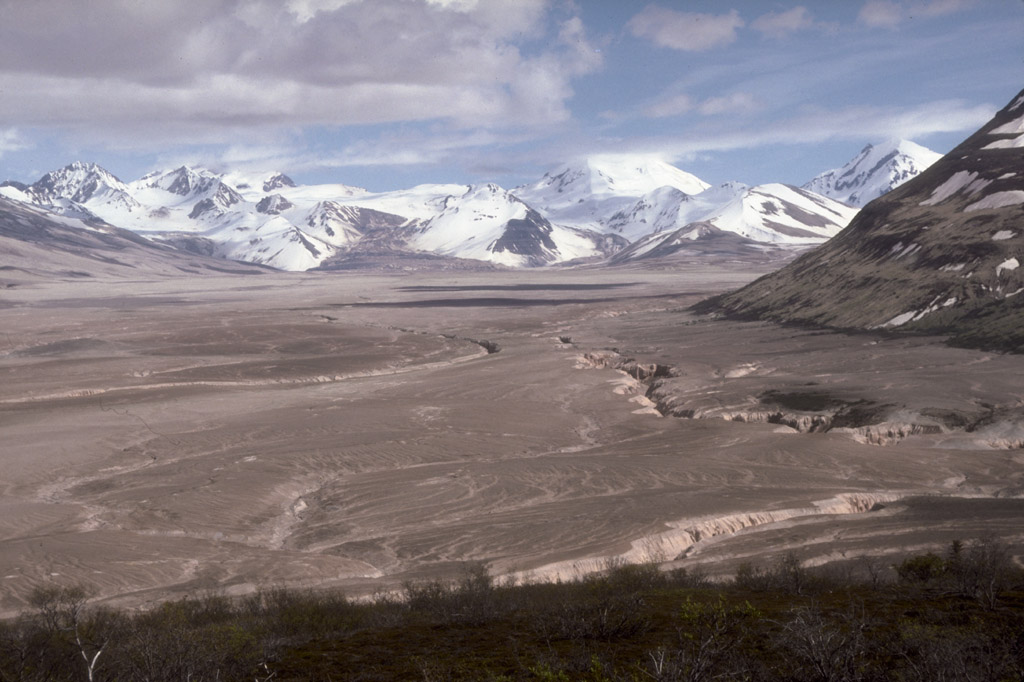
Novarupta left its legacy in the form of The Valley of 10,000 Smokes, a once fertile wetland that was smothered by a flow of ash 650 feet deep in some places. Despite the natural devastation to the entire Alaskan Peninsula and Kodiak Island- the death of wildlife, the suffocation of salmon streams, the destruction of habitat - the ecosystems of these areas were able to recover and rebuild within 5 years. The actual Valley, to this day, has not. When National Geographic explorer Robert Griggs first visited the Valley in 1918, it was covered with countless smoking fumaroles. He thought this was volcanic activity, and it was due to his lobbying that Katmai National Monument was created, to preserve what was thought of as a "future Yellowstone".


As it turns out the smoke was actually steam from the rivers that were boiling under the hot ash. The vents steamed for many decades, but today there are no more "smokes" in the Valley. There are also little signs of life; to this day it is a desolate wasteland of ash and pumice carved by treacherous rivers.


Our plan was to leave in the morning from the Park Service overlook, hike across and up the Valley, cross the River Lethe at some point, climb Baked Mountain and camp at the "Baked Mountain Huts" left there by the U.S. Geological Survey in the 1960s. The next morning we would hike through the saddle of Baked Mountain until we could see Novarupta, the site of the actual eruption, and then return to the huts to grab out gear before making the return hike through the valley and back to the overlook. It would be about a 25 mile journey in all.


There were nine of us and as you can see we were a motley crew. I looked out across the inhospitable terrain that we were attempting to cross (see above), finally turning my gaze to the twins (to my left), who were also contemplating our daunting journey. I considered their small frames and inexperience at backpacking, while they no doubt did the same with respect to me. Our gazes met, and it was at that moment we knew we were going to die out there.

By the time of the 1912 eruption, the people of the villages of Savonoski and Katmai had already fled, many to the nearby island of Kodiak. Within hours the ash cloud reached Kodiak, plunging the island into 3 days of darkness and crushing roofs under the weight of the fallen ash. 4 days later the cloud reached Virginia and after 10 days it was spotted over North Africa. The eruption was 100 times larger than Mt St. Helens. Despite stranded fishing boats, collapsed houses, pervasive darkness, and respiratory trouble, the resourceful natives all survived the blast. I was certain I would no be so fortunate.


Our first river crossing reinforced that certainty. My skinny white legs were no match for the cold waters of Windy Creek, but I admit that the loss of feeling in my feet and legs was rather peaceful. I hoped that the same feeling would come over my entire body prior to my inevitable demise in this godforsaken land.


After a half day of hiking we reached the River Lethe. Somehow we would have to cross this perilous gorge if the were to make it to the Baked Mountain Huts, and I knew from the lore of our park that river crossings were actually the most dangerous occurrence in Katmai. Some years ago an interp Ranger fell while crossing the Lethe; her body was never found (no kidding). A look at one of the twins' faces let me know that he too understood the futility of trying to escape this hell alive.

Obviously this was not the place to cross and so we followed the river for a few miles, coming across nothing but an alien land of rocky pumice and wet ash that our boots sank into. Father Hubbard, a Jesuit priest/explorer/professor of glaciers (again no joke), visited the Valley in the 1930s and called it "an abomination of desolation". This term was mentioned many times by either me or my fellows in doom, the twins, during our thankless hiking. At times it felt like I was walking on the moon, except of course Neil Armstrong lived to tell the tale.


Finally we encountered a sign of life: the tracks of a godless killing machine, the brown bear.


Doubtless it had moved ahead of us only to plan an ambush when we least expected. I took little comfort in the fact that I offered only a modest portion to the bear; after all there was more more meat on my bones than on one of the paltry twins.

I did not know whether my life would end at the claws of that ruthless assassin, the depths of the River Lethe, or the hands of my starving colleagues, but I was certain of one thing -- that I did not want to die without tasting beef jerky one last time, so we stopped to have lunch. Our packs still held food and water to sustain us, and so the inevitable drawing of straws was postponed to a later date.


Eventually we came to a point in the river where it widened out of the gorge and formed a shallow river still covered in ice in some spots. My party was hesitant to cross it for fear the the ice might give way, spilling them into the freezing and fast moving water below. Having already resigned myself to certain death, and wishing to arrive at the huts sooner than later so I could make myself some Ramen, I decided that there were worse ways to die than at the merciless whims of the Lethe the river god. So I crossed her at this point and my companions, still nervous due to my perceived lack of bulk, followed.

As night approached and the air turned wet, we reached the base of Baked Mountain. Looking up to the plateau we would have to reach to find the huts, my tired feet told me to give up and accept the inevitable, but I did not have a gas stove so I decided to follow the group lest I be forced to eat my Ramen uncooked.


Finally we reached the wooden USGS shacks that appropriately smelled like fuel inside. How ironic that we would survive the abomination of desolation we just hiked through only to die in our sleep inhaling gas fumes in an enclosed hut. But confoundingly I woke up in the morning, and so I started out towards Novarupta. The sight of that volcanic plug, the one thing in the Valley that is still smoking, made the trip worthwhile and I made a mental image in order to take it with me to the grave that I would certainly meet on the return trip.


But astonishingly, and in no small part thanks to my unflagging heroism, we all escaped that abomination of desolation and made it back alive. We returned to the overlook to find that the ominous clouds had cleared to leave us with the best view of the Valley yet. We had hiked all the way to the snowy mountains in the background, through them to Novarupta, and back in 2 days.


The realization of my survival has not yet sank in, and from my face and those of the twins you can see we still wonder if the Expedition won't careen off the dirt road and down a mountain on our way back to camp.


I hear that survivors of traumatic incidents often think this way, remaining in a state of heightened vigilance well after they are safe in an ambulance. In any case, I did make it back to camp and I will leave you with one more picture of those fragile legs that carried me the distance:

Thursday, May 31, 2007

Dumpling

Brooks River is a short corridor between two vast lakes, Naknek and Brooks. Of these two glacial-fed bodies of water, Lake Brooks has the higher elevation and thus drains down Brooks River into Naknek Lake, the totality of this water eventually ending up in Bristol Bay via the Naknek River. Brooks Camp, where I am presently writing, is situated at the mouth of Brooks River along the shore of Naknek Lake. Gazing down on this hydrodynamic drama and the surrounding wilderness is Mt. Dumpling, a (relatively) short mountain next to our camp.

I hiked Dumpling this evening after work. It is hard to describe the feeling that comes from walking along the top ridge of a mountain. As you walk, the scenery of the land below passes movielike on either side, as if you had all of a sudden found yourself in the midst of a Lord of the Rings film. But the pristine lakes that stretch for miles in every direction are real. The vast forests of spruce and newly blooming birch, close enough to you as they begin their descent down the mountainside to pick out individual needles but blurring into an endless green mass by the time they reach the lake shore, are real. The snow covered mountains that you now stand eye to eye with, some well over 30 miles away but seemingly near-at-hand, are real. You suddenly and keenly pick up on the scent and feeling of the air; it seems to both separate and connect you with all that is below and away. You become acutely aware of the previously unnoticed soundscape -- the whistle of the wind, the crashing of the waves far below, the calls of nesting birds. It all feels so right, like you belong and have always belonged on this lofty perch.

Why is it that we are drawn to nature in this way? Does it give us some kind of inner peace? Peaceful would hardly be the way to describe my mood as I stood on that mountain. I felt restless and alive; the wilderness below me seemed to be pulling at me. I wanted to plunge into those dark forests to see what new sounds and smells awaited, I wanted reach those distant mountains and climb them and look back on the one I was then standing on, I wanted to ride those waters out to the sea. My thoughts were as turbulent as the windswept lakes below me. I don't know what this means, but I know nature is something more than a quiet, solitudinous respite from our tedious lives, and it is hardly ever peaceful.

I have hiked Dumpling previously and I had been waiting to post this entry until I could get my film developed and share with you some of the wondrous views, both from Dumpling and the beach our camp is on. Many thanks to Steve G for getting my pictures up on the internet but as it turns out the film I used was going bad. I am going to go ahead and post these grainy shots for now; I know they are close to worthless but check it out anyway and I will retake them and get some real ones up soon. Tomorrow or the next day I will put up a post about my hike to The Valley of Ten Thousand Smokes, the site of the 20th century's largest volcanic eruption. For now, enjoy the view from my office:

Naknek Lake is in the foreground. On the right is Mt. Katolinat, seen up close here:


Turn to the right and you have the beach of Naknek Lake:


See Mt. Kelez in the background? Now you do:

The above pictures were all taken from right out in front of camp on the beach of Naknek Lake. For some perspective, here is Katolinat and Naknek Lake from nearby Mt. Dumpling:


That's Renae in the foreground. Wish her luck; right now she is tent camping in the backcountry taking genetic samples of fish. Right next to her elbow is where Brooks River feeds into Naknek Lake and the site of our camp:

You can see the tiny structures of our camp in the clearing below the mouth of the river. If you could zoom out and follow that river to the right, you would see where it flows from Lake Brooks:


That's Kelez again, and although you can't see it the famous Brooks Falls are located in one of the foremost turns of the river. Camp and Lake Naknek would be just to the left (see above). The body of water here is Lake Brooks, where I have had some luck fishing for Rainbow Trout. Until later,